
| |||||||||||||||||

Project Justification


Project
 Brigadier General Dr Oviemo Ovadje started the EASET project in 1989 with a meagre sum of N 18,000 Eighteen thousand Naira ($120)
The main organizations that have been behind the success of Eat-Set are the United Nations Development Programme (UNDP) and the Federal Government of Nigeria. The World Health Organization acted as an executing agency in the developmental phase of the device.
Right from the inception of the project the UNDP and the Federal Government provided support for research, development and testing of the technology.
The UNDP & Government assisted securing the patent trade marks and intellectual rights of the inventor.
The Federal Government has provided an environment conducive for a project of immense importance as this to grow. Financial assistance has been provided in many ways by the Federal Government and various workshops to facilitate awareness in this area of health have been organized. Click here for more information about the History of Eat-Set and the Federal Government involvement. The project however needs more support to fulfill its objective of providing appropriate devices for developing countries.
Brigadier General Dr. OTU OVIEMO OVADJE
Fss MSS DSS PJSC MBBS DA FMCA FWACS MON NOPM OFR
Chief Consultant Anaesthetist & Intensive Care Therapist
Military Hospital
LAGOS
Tel / Fax : + 234 - 1 - 2622837
Email: ovadje@excite.com | ovadje@rediffmail.com
Ovadje CVMilitary Hospital
LAGOS
Tel / Fax : + 234 - 1 - 2622837
Email: ovadje@excite.com | ovadje@rediffmail.com
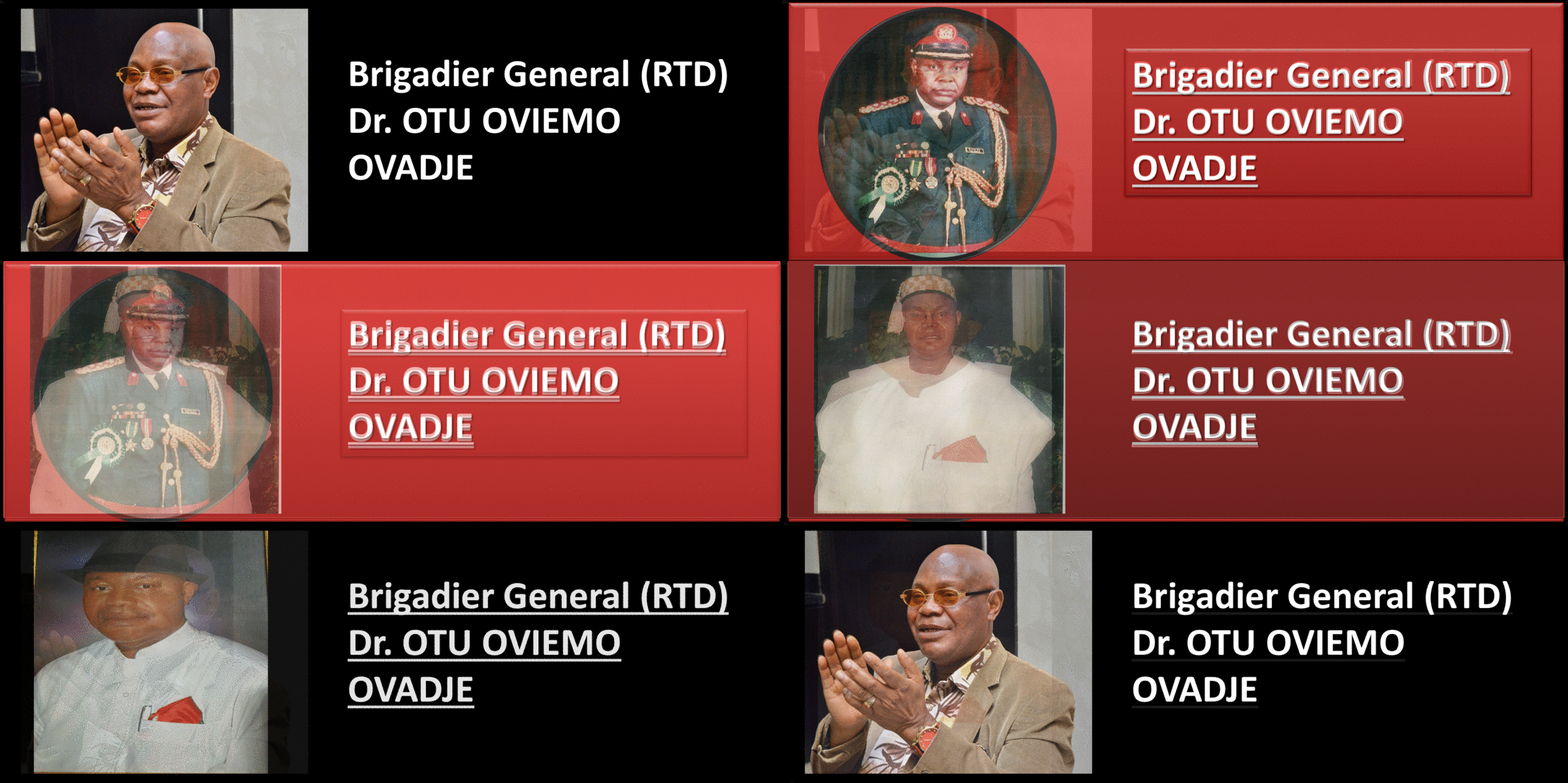
Brigadier General Dr. Otu Oviemo Ovadje, born 20 December 1954 is a Medical Doctor in the Nigerian Army and a Chief consultant anaesthesiologist and intensive care physician who works at the Military Hospital, Ikoyi-Lagos. Trained at both the Lagos University Teaching Hospital and at the University of Benin Teaching Hospital. He is a Fellow Medical College of Anaesthesiology, Fellow West African College of Surgion member Association of Military Surgion of the Federal Republic of Austria and Life member of the Association of Military Surgion of the United States (AMSUS) and has attended numerous courses and conferences internationally.
 |
Brigadier General Dr. Ovadje was declared the Best African Scientist in 1995 before African Heads of States when he won the World Intellectual Property Organisation and Organisation of African Unity Gold Medal for scientific work designed to save women who usually die from abnormal pregnancy (ECTOPIC GESTATION). He also won Promex Silver Medal in Geneva in April 1998. He is a two time winner of the Chief of Army Staff Award of the Nigerian Army for professional excellence, and various non medical awards. Recently elected into the membership of the Association of Military Surgeons of the Federal Republic of Austria.
Brigadier General Dr. Ovadje was Chief of Delegation -Nigeria, to the World Congress of Military Medicine at various times. Dr. Ovadje has delivered lectures in United States of America, Germany; China; Zimbabwe, Austria and Lesotho- South Africa. He is a member of the Technical Working Committee of the International Congress of Military Medicine.

Brigadier General Dr Oviemo Ovadje in 1989, solved the problem of blood salvage from body cavities by pioneering and creating a design the EATSET to replace and improve on the gauze filtration technique as practiced in developing countries. The EATSET device has been described as a low cost and an appropriate technology relevant to the needs of developing countries. Its development is part of the global effort at ensuring blood safety. The device is made up of a transparent rigid capsule, incorporating a V – shaped micro – filter and its part arrangements allow its adaptation to a manual source of low vacuum.
Brigadier General Dr Oviemo Ovadje, as a medical doctor undergoing specialist training in Nigeria, observed that a lot of women during pregnancy in developing countries die from internal haemorrhage (bleeding) arising from ruptured ectopic pregnancy.
Brigadier General Dr Oviemo Ovadje, as a medical doctor undergoing specialist training in Nigeria, observed that a lot of women during pregnancy in developing countries die from internal haemorrhage (bleeding) arising from ruptured ectopic pregnancy.
What is Autotransfusion ?
Autotransfusion
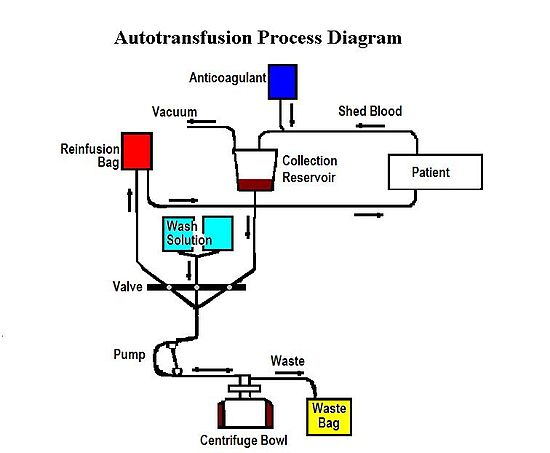
Advantages of Transfusion
Rapid availability of blood. Does not require any
blood storage facilities.
 No risk of disease transmission. No incompatibility of product transfused. No risk of alloimmunization. Conserves blood banks supply.
System Description
EAT - SET is a system for recovering blood from internal bleeding. Its primary application is for patients with internal haemorrhage. Such blood can be safely reinfused if processed within the first 24 hours after haemorrhage. Blood is aspirated through a multiple filtering unit into a collection container and is reinfused by gravity to the patient after a filtration process.
The main features of the EATSET are as follows: Rapid recovery of blood from internal haemorrhage. Simple to use: Can be totally manually operated. Closed system: No risk of infection transmission. Cost effective: Disposable except manual
pumping unit.
Rapid recovery of blood from internal haemorrhage. Simple to use: Can be totally manually operated. Closed system: No risk of infection transmission. Cost effective: Disposable except manualpumping unit.
Subscribe to:
Posts (Atom)


Follow Us
Were this world an endless plain, and by sailing eastward we could for ever reach new distances